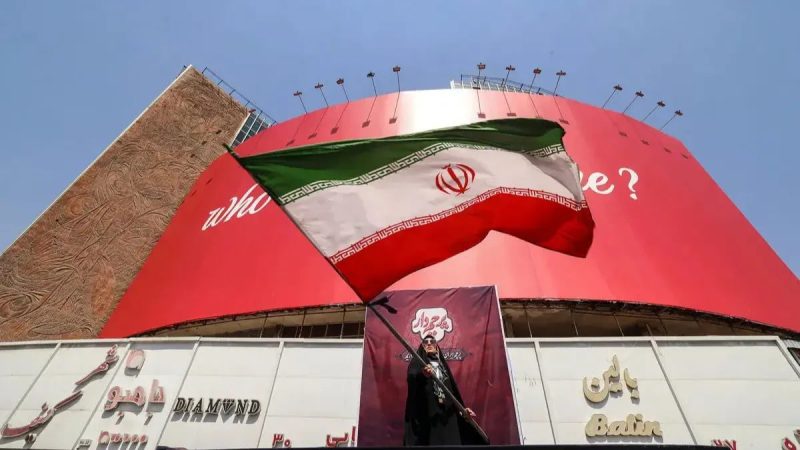
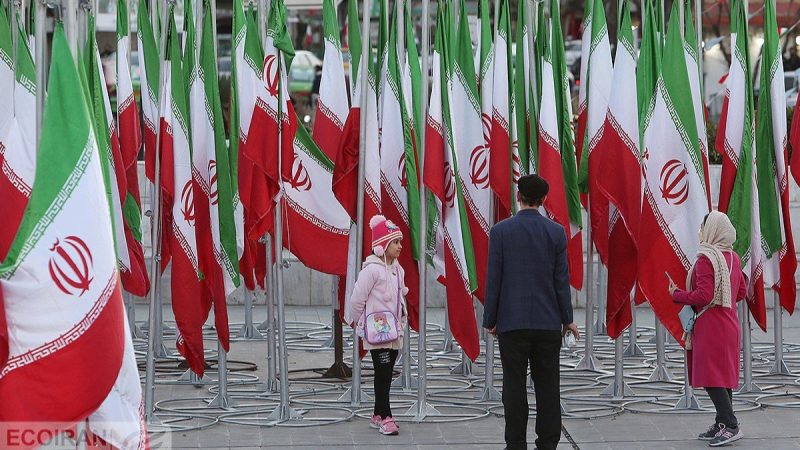
Over the past four decades, Iran and Afghanistan have formed a complex and inseparable bond: hundreds of kilometers of porous borders and recurring wars across the Helmand River have made Iran the first host of millions of Afghan refugees. This population—estimated by independent sources to be between five to six million today—not only bears humanitarian and social weight but also constitutes the invisible backbone of the country’s manual labor market. However, following the twelve-day conflict between Iran and Israel in June 2025, internal security suddenly became a new national priority. The government claimed that Israeli infiltration networks had used migrant populations for sabotage and, in response, launched a wave of mass expulsions targeting “undocumented” Afghan nationals. Although the espionage allegations involved only a few individuals, they stirred public sentiment and triggered the hashtag “#DeportAfghans” across social media.
The issue is now far more than a border dispute or a human rights concern; this is where economics, security, and the dignity of millions intersect. Rash decisions about the presence or removal of Afghans can inflict inflationary and recessionary blows on the construction, agriculture, and urban service sectors—or conversely, if paired with smart policymaking and migrant registration, yield positive spillovers for productivity and national security. Therefore, any serious evaluation of the war’s aftermath and the future of Iran’s labor market must address this central question: can the state strike a reasonable balance between legitimate security concerns and the economy’s vital need for labor?
The Twelve-Day War: A Trigger for a Costly Decision
According to the Parliament Research Center, within just two weeks of military conflict:
Urban service firms incurred over 58 trillion IRR in direct losses.
Retail sales dropped by an average of 47%.
Registered work hours on the national tax platform for urban services, transportation, and hospitality fell by 35%, meaning at least 900,000 jobs were temporarily unused.
Amid the tense atmosphere in the capital, rumors of “Afghan involvement in sabotage” prompted security decision-makers to revive the long-shelved plan for “cleansing illegal employment.” The outcome is clear: from July to October 2025, the Ministry of Interior reported the expulsion or border-return of 237,000 undocumented Afghan migrants—equivalent to about 5% of the entire construction labor force. The exit of such a large number of semi-skilled workers is a shock that could prove more enduring than the physical destruction caused by bombings or even the entire military cost of the war.
The Invisible Backbone of the Economy: The Role of Afghans in Iran’s Labor Market
Afghans have long been part of Iran’s workforce, with the first major wave dating back to the 1980s. But in the last decade—especially after the fall of Kabul in the summer of 2021—the pace of migration has sharply increased. Independent estimates (a combination of data from the Statistical Center of Iran, IOM, and the Ministry of Welfare) suggest that the Afghan population in Iran today stands between 5.3 to 6.1 million, with 3.2 to 3.6 million being economically active. Their distribution is far from random:
Amid official silence, the real labor market must be traced in unventilated welding shops, dry southern farmlands, and loading docks behind shops. Afghan workers have long sustained the invisible share of tough, low-attraction jobs. Field studies and 2024 estimates, based on labor force surveys and the Ministry of Interior’s tribal census, offer a clearer picture of their role:
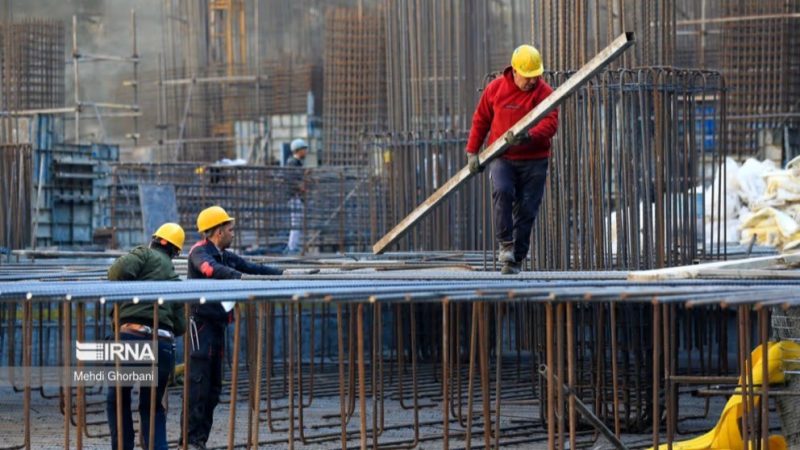
In construction and civil works, Afghans dominate. Between 62–68% of the sector’s workforce is Afghan, from rebar work and formwork to plastering, welding, and daily labor. Most urban housing projects would halt without them.
In urban services like sanitation, waste collection, and recycling, their presence is vital. It’s estimated that 53–57% of active workers in these areas are Afghan. They take on low-paying, long-hour night shifts that most Iranians avoid.
In urban transport—especially motorcycle couriers, light cargo, and van drivers—they play a major role. In cities like Tehran, Karaj, and Mashhad, 22–28% of informal cargo/passenger transport is run by Afghans. Despite low GDP share, these jobs are critical for fast urban service delivery.
Seasonal agriculture is another stronghold. In provinces like South Khorasan, Sistan-Baluchestan, Hormozgan, and Kerman, 36–40% of seasonal planting and harvesting workers are Afghan. Without them, crops like tomatoes, cucumbers, watermelon, or saffron face productivity threats or cost increases.
In labor-intensive small industries—such as textiles, brick kilns, pottery, and workshops—Afghans make up 30–34% of the workforce. Despite poor conditions and lack of benefits, they ensure the survival of many small enterprises.
Why are these shares so high? First, wage advantage: uninsured Afghan laborers earn 30–45% less than the legal minimum. Second, skills: in urban construction, Afghans provide a full skill chain—foremen, column setters, plasterers, welders. Third, job stability and risk tolerance: migrants, motivated by the hope of work, endure harsh conditions and rarely change jobs.
The result is a “labor preference gap,” as economists call it: for some jobs, even higher wages fail to attract enough Iranian workers. Insurance records for construction workers in Tehran show that out of 180,000 subsidized insurance slots in 2023, only 73,000 Iranians enrolled—the rest were filled by Afghans.
3. Unplanned Deportation: A Recipe for Recession and Inflation
The government offers three main arguments for mass expulsions:
National security
Opening jobs for Iranians
Reducing pressure on public services
Yet none of these stands up to scrutiny.
3.1. Security Test
After the twelve-day war, Iranian officials announced the arrest of over 700 alleged Israeli agents. Among them, only about 16 were Afghan nationals. While covert infiltration is a valid concern and registering migrants is essential for national security, generalizing sabotage accusations to the entire Afghan community lacks both data support and strategic logic. The mass expulsion reflects post-war political climate and xenophobia more than hard evidence.
3.2. Employment Test
Labor market data from December 2025 show that, after the first wave of expulsions, the average wage for basic construction laborers in Tehran rose by 43%—but workforce participation increased only 1.2 percentage points. The reason is clear: hard jobs, even at high pay, don’t automatically attract locals; manual labor skills and work culture take time. Meanwhile, the cost of each square meter of residential construction in Tehran rose by 9.5% in three months—a spike directly linked to the “shortage of skilled labor,” according to construction managers.
3.3. Public Services Test
Afghan street cleaners kept cities clean. In July 2025, garbage collection in nine major cities dropped 18% compared to the previous year—not due to reduced consumption, but lack of workers. Ten days of summer heat was enough for overflowing bins to become a public health hazard. Waste management agencies estimate that if replacements aren’t found within six months, daily operational costs will rise 1.7×.
3.4. Macro Effects
A Computable General Equilibrium (CGE) model by the University of Tehran’s Economics Research Center simulated the expulsion of 800,000 construction workers:
Construction investment growth ↓ 0.9 percentage points over two years
Building material inflation ↑ 3.5 percentage points in the first year
Total economic output ↓ 0.6 percentage points due to spillover into upstream industries (cement, steel)
Formal unemployment ↓ only 0.25 percentage points—within the margin of survey error
The verdict: deportation doesn’t reduce unemployment, but it does increase construction costs, reduce investment, and hurt overall welfare.
4. Government Strategy: Mitigating Risk, Unlocking Migration’s Potential
As a $400 billion economy, Iran cannot fully seal its porous borders—nor can it afford to ignore the benefit of affordable labor. So what’s the right policy?
4.1. Security Risk Mitigation
The threat should be managed through complete biometric registration, not mass population shifts. Turkey’s example during the Syrian crisis is telling: in 2016, Ankara issued 2.1 million biometric IDs within eight months, reducing violent crime in border camps by 34%. Iran could implement its own “Smart Migrant Card” plan—already designed by the Ministry of Welfare but lacking funding—and register all economically active Afghans with facial and fingerprint data. Such a database could support tax and insurance policy too.
4.2. Smart Labor Quotas
Rather than blanket bans, Iran could emulate Canada: issue temporary work permits only in jobs with no local applicants. The Ministry of Labor already published a list of 185 hard-to-fill jobs last year. Applying quotas to that list would reduce public pressure while preserving employer flexibility.
4.3. Shared Insurance & Migrant Fund
Employers prefer Afghans because they don’t have to pay insurance. The answer is not prohibition—but co-funded insurance. Following Malaysia’s “Guest Worker Fund” model, premiums could be shared by the government and IOM to keep employer costs low and legalize workers. Iran could fund migrant health insurance using visa and exit taxes, enabling official monitoring and boosting security.
4.4. Institutional Use of Afghan Skills
The real-world expertise of Afghan workers in construction, mining, and agriculture is an undervalued asset. A clear proposal:
Bi-national cooperatives for rural development projects in eastern Iran. The state provides land and credit; migrants contribute skills and labor; profit and jobs stay in the region.
Joint vocational schools under the Technical & Vocational Training Organization. Low tuition in exchange for five-year commitments on infrastructure projects—similar to Dubai’s Indian worker program, which reduced worksite errors by 29%.
Transferable Skill Certificates—a “Skill Passport” for Afghan masons, welders, or stonecutters, valid both in Iran and postwar Afghanistan. A side benefit: positioning Iran as the regional training hub for skilled labor.
5. Conclusion: Opportunity Behind the Crisis
The twelve-day war made one thing clear: national security and economic security are two sides of the same coin. But breaking the labor backbone of Iran’s economy won’t protect it. Afghans—quiet, often invisible—play a vital role in building our homes, keeping our cities clean, and putting food on the table.
Unplanned expulsions pave the way for new inflation, deeper recession, and even corruption tied to an expanding underground labor market.
If the Iranian government wants to enhance security while preserving growth, it must treat migration as a source of national strength. Smart registration, labor-market-based quotas, co-funded insurance, and institutional skill integration form the four pillars of such a policy. Only then can we say we’ve minimized the cost of a short war—and turned a potential crisis into a bridge to greater productivity and more sustainable growth.