In recent weeks, financial markets have been shaped more than ever by the simultaneous pressure of global and domestic variables—a condition that makes decision-making harder for investors, yet far more meaningful. While major global stock markets are going through price corrections, tighter monetary conditions in parts of the world, and a rise in institutional risk aversion, Iran’s economy is grappling with its own set of challenges: policy uncertainty, currency volatility, and persistent inflation expectations.
This coincidence of external and internal pressures has created a dual reality for Iran’s capital market. The stock exchange can neither fully detach itself from global trends nor rely solely on domestic factors. In such an environment, analyzing Iran’s stock market requires a layered and hybrid perspective—one that understands the pulse of global markets, deciphers expectation-driven dynamics within the domestic economy, and closely observes the behavior of retail and institutional investors as a third, decisive variable.
Iran’s capital market is effectively experiencing two forces at the same time. On one hand, there is external pressure stemming from the global correction of risk assets. On the other, there is internal pressure driven by policy ambiguity and expectation-based uncertainty. Global market downturns typically affect Iran through commodity prices, international interest rates, and capital flows toward or away from emerging markets. Declines in the prices of base metals, oil, or petrochemical products can directly impact the profitability of export-oriented companies and lead to downward revisions in earnings expectations.
At the domestic level, however, currency fluctuations and inflation expectations keep certain sectors—particularly dollar-denominated industries and companies with foreign-currency revenues—at the center of investor attention. These sectors often act as a hedge against inflation within investment portfolios. As a result, Tehran’s stock market neither simply mirrors global corrections nor behaves as a purely inward-looking market. Instead, it exhibits a hybrid behavior, constantly re-weighting external signals against domestic developments.
When internal political or currency-related news intensifies, the market tends to decouple from global trends. When such signals fade, attention shifts back to international indices and global commodity prices. This is why sustainable confidence cannot return to Iran’s capital market through short-term stimuli alone. It requires a combination of factors: clearer economic policies, relative stability in key macro variables, reduced non-economic risks, and the creation of genuine incentives for productive investment.
The Economy of ожидание, Smart Decisions, and the Question of Timing
Recent global market corrections are not merely price-based events; they are signals calling for a reassessment of expectations and decision-making frameworks. In this context, the concept of an “economy of expectation” becomes increasingly relevant—an economy in which market participants rely less on hard data and more on scenarios, probabilities, and anticipated policy paths.
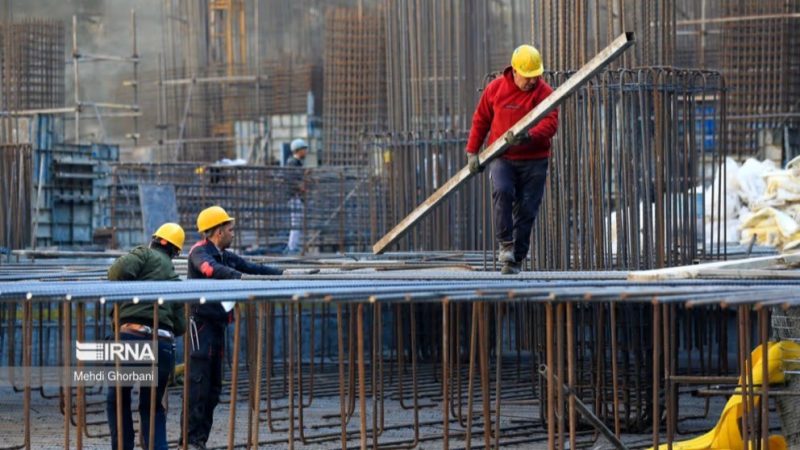
For Iranian investors, this environment can be both challenging and opportunity-rich, provided analysis moves beyond price charts and short-term signals toward a deeper understanding of economic cycles, industry profitability structures, and the quality of policymaking. When capital in Iran remains trapped in short-term, defensive financial movements instead of flowing into productive sectors, it signals a structural problem—rooted in regulatory uncertainty, a difficult business environment, and the absence of a clear investment horizon.
Addressing this imbalance requires coordinated action: reducing systemic risks, improving regulatory transparency, easing entrepreneurial processes, and creating real incentives for production and long-term investment. Only under such conditions can capital shift from short-term financial safe havens to productive, long-term investments—and only then can the capital market fulfill its true role as a financier of growth rather than a mere arena for speculation.
Is This the Right Time to Buy?
The short answer could be “yes”—but with important conditions. The right time to buy is not the same for everyone. It depends on investment horizon, risk tolerance, and analytical capacity. For long-term investors with diversified portfolios and the ability to absorb short-term volatility, correction periods often provide opportunities for gradual, phased entry. For short-term traders lacking a clear risk-management strategy, however, the same environment can be costly and exhausting.
Ultimately, the shared message of both global markets and Iran’s domestic economy can be summarized in one phrase: a reset of expectations. As the global economy recalibrates risk and return, Iran stands at a point where it must move away from the dominance of financial speculation over the real economy and toward strengthening productive foundations. Achieving this shift would not only deepen and stabilize the capital market, but also help form a more sustainable cycle of growth, employment, and trust—one in which the stock market reflects a development outlook rather than collective anxiety.